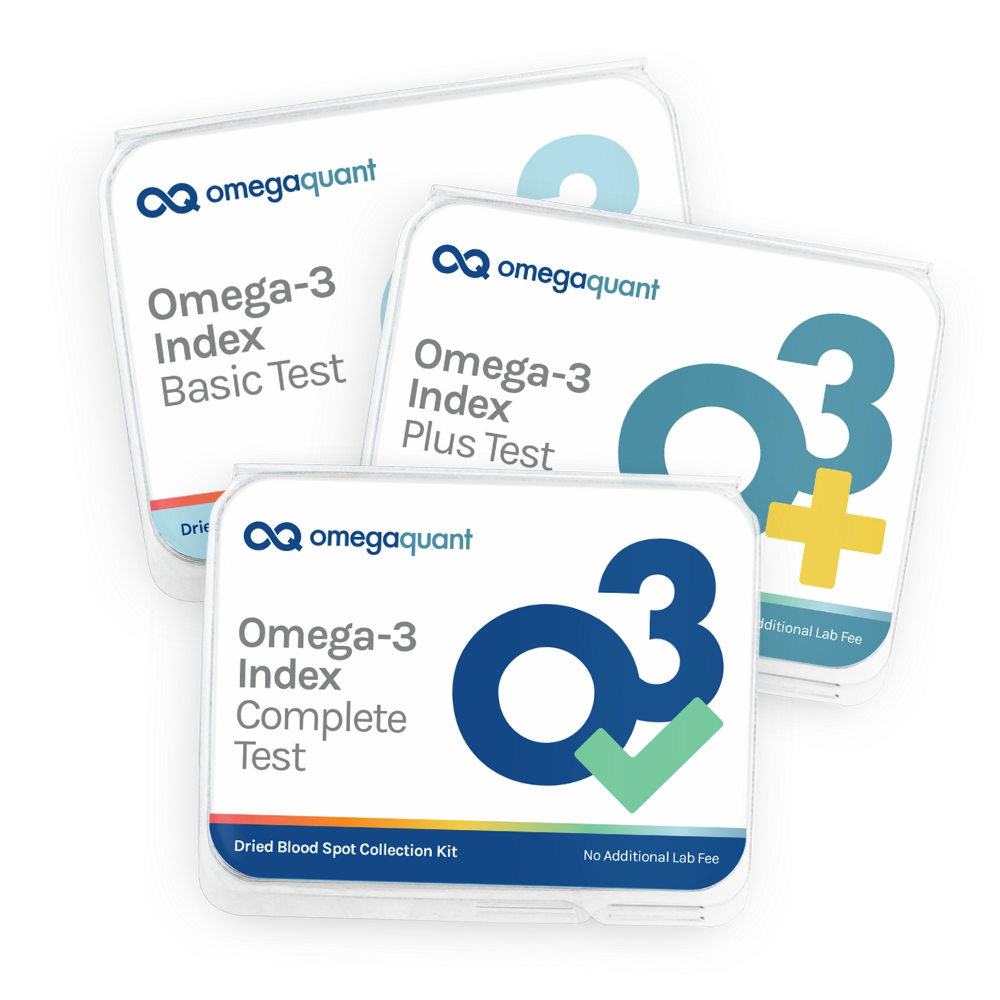
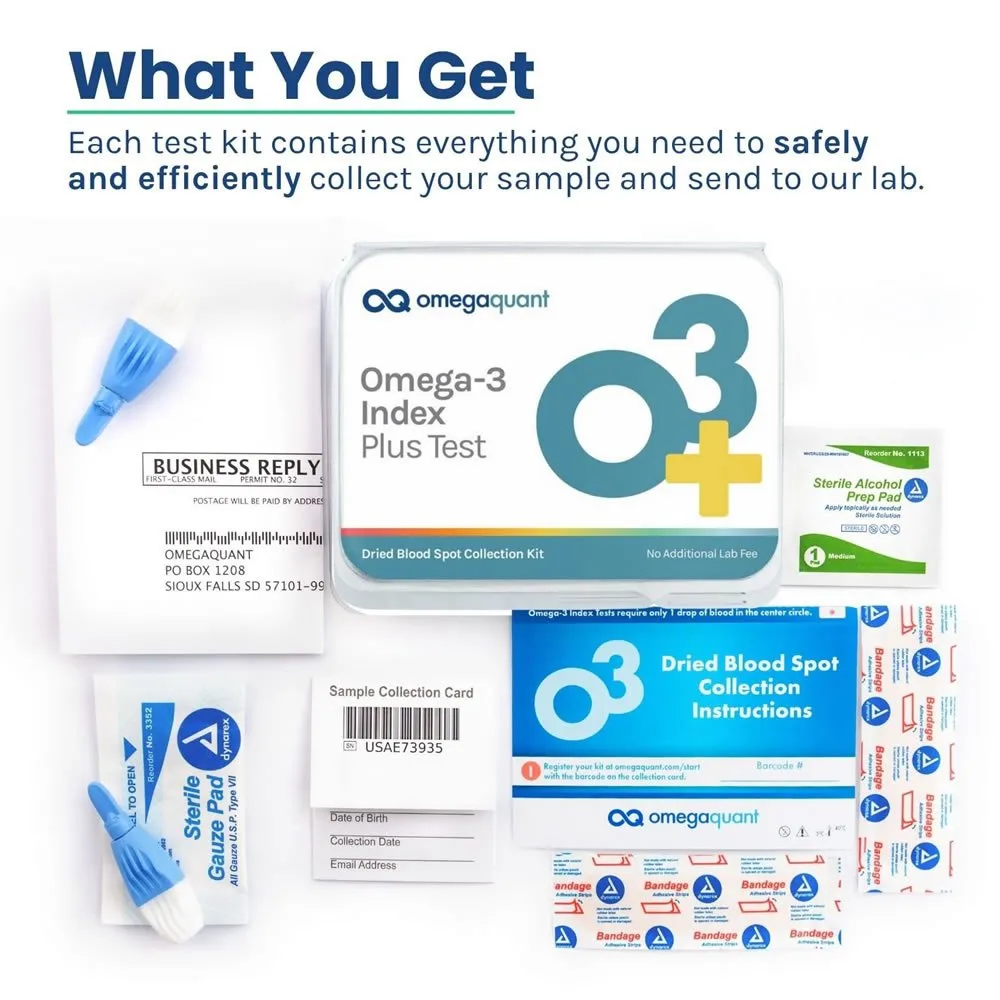
Description
Contents: All inclusive at home test kit – (1) Collection Kit, (1) Instructions, (1) Prepaid Return Envelope
Screening Time: < 10 Minutes
Determination Options:
- Omega-3 Index
- Omega-6:Omega-3 Ratio
- AA:EPA Ratio
- Trans Fat Index
- Individual fatty acid level
Do you know your number? When you take an Omega-3 Index test it gives you a percentage, which is simply a measure of the amount of EPA and DHA in your blood. An Omega-3 Index of 8% or higher is ideal, the lowest risk zone. However, most people hover around 6% or below. And unfortunately in the US, most people are at 4% or below – the highest risk zone. Raising your Omega-3 Index to the desirable zone of 8% will help ensure you are getting enough of the right omega-3s — EPA and DHA — to protect your health.
Omega-3 Index: Measures the amount of EPA and DHA in your blood, specifically the red blood cell membrane. Membranes, or cell walls, are made of different kinds of fats called fatty acids. We have found that having a higher proportion of EPA and DHA in the membrane tracks with how much omega-3 is in your diet and is a marker of better health. Raising your Omega-3 Index to the desirable zone of 8% will help ensure you are getting enough of the right omega-3s — EPA and DHA — to protect your health.
Omega-6/Omega-3 ratio: Analyzes 7 omega-6 fatty acids and 4 omega-3 fatty acids. The total amount of omega-6s and omega-3s are divided by each other to get a ratio. We recommend a ratio of 3-5:1 (omega-6:omega-3).
AA/EPA ratio: Measures level of arachidonic acid (AA), an omega-6 fatty acid, vs. eicosapentaenoic acid (EPA), an omega-3 fatty acid. These are important fatty acids in metabolism because powerful signaling molecules can be made from them. These molecules can affect anything from blood clotting to birth contractions to inflammatory responses. Having different levels of these two fatty acids could affect processes that ultimately impact inflammation and overall health.
Resources: